
The STOP Act is coming.
And it’s not just New York’s problem.
Here’s what happened:
New York legislators introduced a bill that treats every dollar a consumer pays for a wage advance, tips, expedited fees, and membership charges as a finance charge.
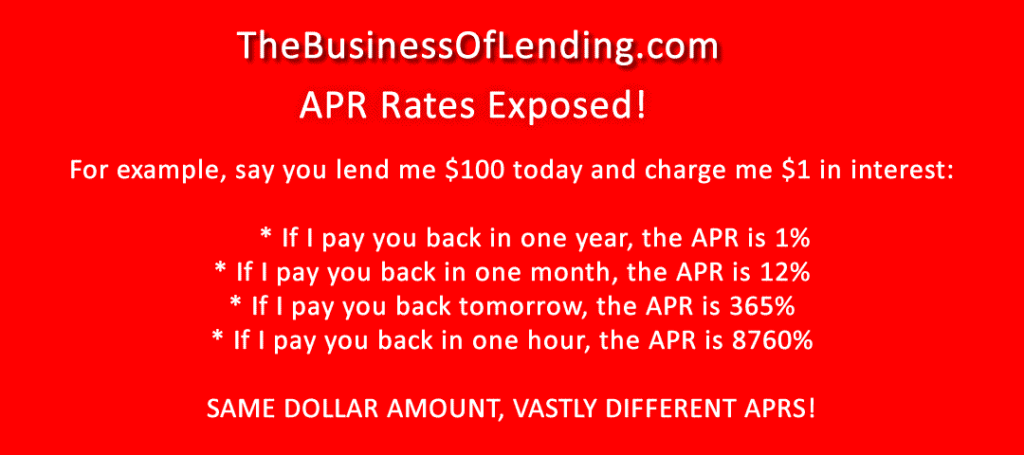
Slap those numbers into the APR formula, and suddenly the “no-interest” earned wage apps are running triple-digit rates against a 25% usury ceiling.
Game over.
The NY Attorney General already sued MoneyLion and DailyPay in April. The complaints read like a regulatory blueprint: “payday loans by another name,” deceptive marketing, fees that violate usury caps when calculated honestly.
Why should you care if you don’t operate in New York?
Because legislative staffers in every progressive state now have model bill language sitting in their email.
Consumer advocacy groups are citing these AG complaints in hearings from Illinois to Colorado. The template is written. The narrative is polished.
The dominoes are lined up.
The states where high-APR lending still works; Texas, Missouri, Tennessee, Utah, the other 28 or so in your operating footprint, those are defensible today.
But “optional” fees, “voluntary” tips, and membership models that smell like semantic arbitrage? Those have a target on their back.
Now layer in the labor market.
UPS just announced 30,000 job cuts for 2026 on top of 48,000 they axed in 2025.
Amazon followed with 16,000 corporate layoffs, bringing their total to 30,000 since October.
These aren’t abstract numbers. These are hourly workers, logistics employees, warehouse staff, the exact demographic that needs emergency liquidity when hours get cut or the pink slip lands.
VantageScore data shows subprime credit inquiries are climbing.
Demand isn’t shrinking. It’s accelerating.
But here’s the squeeze: more borrowers entering your funnel with deteriorating income stability means front-loaded defaults.
- The guy who qualified last month may not make his first payment next month if his shift schedule just got halved.
- Collection costs go up.
- Loss severity increases.
- And the media narrative writes itself: “Predatory lenders exploit laid-off workers.”
What this means for subprime operators:
The demand side is expanding.
The supply side is contracting as competitors exit restricted states or face enforcement.
That’s good news for compliant lenders with capital and licenses in the right markets.
But the risk side is real.
Shorter portfolio duration isn’t optional anymore; it’s survival.
Secured products (title loans where legal) give you collateral when income disappears.
And your underwriting better account for employment volatility, not just credit scores.
The operators who survive this wave will be the ones who price transparently, document everything, stop pretending tips aren’t finance charges, and tighten their credit boxes before the layoff headlines hit their borrower files.
The CFPB just exempted “Covered EWA” from Regulation Z if you meet strict criteria: no underwriting, no recourse, consumer accesses only wages already earned. That’s federal air cover, for now.
But state AGs don’t answer to the CFPB.
The bottom line:
Subprime demand is rising because economic stress is rising.
Legal supply is shrinking because regulatory pressure is intensifying.
The lenders who capture that spread will be those with compliance infrastructure their competitors couldn’t afford to build, in states where the law is explicit and the licenses are solid.
- Concentrate your capital.
- Shorten your duration.
- Kill the tip jars.
- And watch the competitor exits create market share for the operators who did the work when it wasn’t fashionable.
This isn’t about New York.
It’s about what happens when a regulatory theory succeeds in one state, the layoff headlines keep coming, and every consumer advocate in America takes notes.
Get my playbook.
Understand how lending really works when collateral is thin, borrowers are unpredictable, and the margins are made in collections.
My ebook is the difference between being a lender with confidence, or a punchline in the next “repo the tattoo” meme.
The only thing worse than missing a payment is missing the knowledge that would’ve saved you from the mistake.
So here’s my straight talk: If you’re serious about lending, you can’t afford not to own this eBook.
 Grab How to Loan Money to Strangers without Getting Your Butt Handed to You now.
Before the next wave of “Buy Now, Pay Later” and “Earned Wage Access” lenders pass you by.
1. What does the New York STOP Act actually do to “tip-based” and earned wage access models?
The STOP Act treats every dollar a consumer pays for a wage advance, “voluntary” tips, expedited fees, and membership charges as a finance charge. When those charges are put into the APR formula, many “no-interest” or “tip-only” wage advance products suddenly show triple-digit APRs against New York’s 25% usury cap, which effectively makes a lot of current tip-based models impossible to run in that state.
2. Why are New York’s actions a threat to tip-based lending in other states?
Once a regulatory theory works in a big state like New York, other progressive states copy it. Legislative staffers and consumer advocates now have ready-made bill language and Attorney General complaints they can use as a template in places like Illinois, Colorado, and beyond. That means a model killed in New York today can become a problem in your “safe” state tomorrow.
3. How are New York regulators going after “earned wage” apps right now?
The New York Attorney General has already sued companies like MoneyLion and DailyPay, calling their products “payday loans by another name.” The complaints focus on how tips and fees, when honestly counted as finance charges, push APRs over New York’s usury limit, and they accuse the companies of deceptive marketing around “no-interest” or “optional” charges. These cases function as a regulatory blueprint for future enforcement.
4. If I don’t lend in New York, why should I care about the STOP Act?
Because demand is rising while legal supply is shrinking. Layoffs and hours cuts at large employers like UPS and Amazon are pushing more subprime consumers into emergency loan channels at the same time regulators are tightening rules on high-APR and tip-based models. That combination creates opportunity for compliant operators, but only if you stop relying on “semantic tricks” around tips and fees and build products that can survive in a stricter regulatory environment.
5. What should subprime and small-dollar lenders do in response to these changes?
Operators need to treat tip-based workarounds as high-risk and focus on transparent, clearly priced credit products that fit within existing rate and fee rules in their states. The article suggests shortening portfolio duration, using secured products like title loans where legal, and tightening underwriting to account for employment volatility, not just credit scores. Lenders who invest in compliance infrastructure and kill the “tip jar” gimmicks are the ones most likely to capture market share as weaker or non-compliant competitors exit.