
Car title lending states 2026: Best States, Biggest Traps
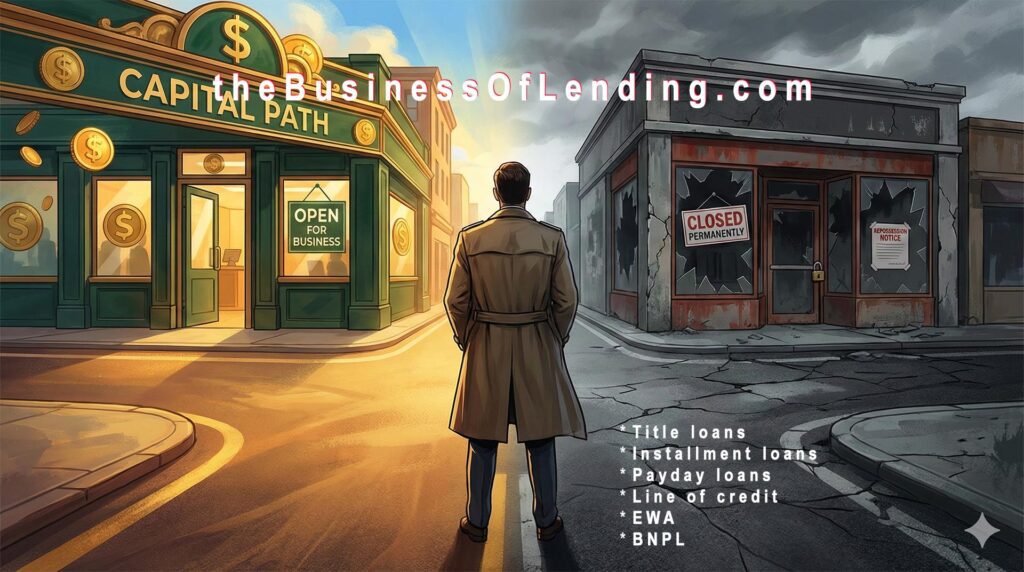
Ever looked at Texas, Georgia, or Nevada title lending stats and thought, “If they can rack up those margins… why can’t I?”
You can. But here’s what separates the operators cashing checks from the ones cashing out: the game changed, and most people didn’t get the memo.
Let’s cut through the noise.
Key Takeaways
TLDR:
Best margin states (quick list)
Biggest “gotchas” (city rules, renewals, vendors)
The 3-step survival checklist
| State | Why it’s attractive | The catch | What to verify |
|---|---|---|---|
| Texas | Big market with long operator history and room for profitable structures in some setups | City rules and enforcement can shift fast, and the “old playbook” can get you flagged | City ordinances (by location), your exact business model structure (ex: CAB/CSO if used), required disclosures, repossession process, vendor compliance trail |
| Tennessee | Often viewed as a workable state for margin if you run a tight operation | Licensing and enforcement details matter, and small paperwork gaps can become big problems | Current licensing path, allowable fees and renewals, required notices and timelines, repossession and cure requirements, complaint handling workflow |
| Nevada | Can support margin and has clear operational expectations in many scenarios | Local interpretation and enforcement can vary, and you need strong documentation | Licensing requirements, fee and notice rules, lien and title process, repossession steps, recordkeeping and audit readiness |
| Georgia | Operators like it when the model is aligned with state rules and local practice | Compliance is not forgiving if your documents or vendor actions are sloppy | Licensing and registration, contract and disclosure set, fee schedule alignment, collections scripts, repossession vendor standards |
| Alabama | Can work for operators who keep costs controlled and compliance tight | If you rely on generic templates, you can get burned during audits or disputes | Statute and admin rules, disclosures, renewals and extensions, repossession and storage rules, vendor agreements and documentation |
| Utah | Can be attractive if your operation is efficient and well documented | You need precise forms and process control, especially around notices and servicing | License type, fee and term rules, servicing requirements, notice timing, repossession rules, data retention and call recording policy (if used) |
| Missouri | Some operators see workable economics depending on model and location | Local practices and enforcement priorities can shift, and vendors can create risk | State rules plus local requirements, repossession and auction workflow, vendor compliance, consumer complaint process, training documentation |
| Nevada (Online focus) | Can be part of an online strategy if licensing and servicing are built correctly | “Online only” does not mean “light regulation” and tracking must be tight | Multi-state licensing triggers, online disclosures, e-sign compliance, servicing logs, ACH rules, repossession logistics and documentation |
| 36% APR cap trend states | Fewer “margin friendly” options push operators into higher-pressure compliance environments | Economic model may not pencil depending on costs, loan sizes, and renewal limits | Current usury caps, renewal restrictions, total cost rules, enforcement posture, alternative products or pivots that fit the law |
- Experience: 20+ years in consumer lending operations and compliance focused execution.
- Editorial note: This is educational content, not legal advice. Rules vary by state and sometimes by city.
- How we update: We refresh guidance when laws, enforcement, or practical operator risks shift.
Nobody hands you a manual the day you open a title loan shop.
You learn by getting hit.
- A surprise audit.
- A vendor who cuts corners.
- A disclosure form that was outdated six months ago.
I know because I took every one of those hits across 15 locations and 20+ years before I put it all into one 500+ page playbook.
“Lending to the Masses” is the book I wish someone had shoved into my hands before I wrote my first loan.
Thousands of operators use it daily for compliance shortcuts, underwriting checklists, and growth levers that actually survive regulatory scrutiny.
Stop paying tuition to the school of hard knocks. Get Your Copy Here.

The Harsh Reality: “High Margin” Means “High Scrutiny”
This isn’t 2012.
The profit spikes in title lending are now a public target for politicians, the CFPB, state AGs, and local activists.
You might see $900+ average net profits per deal and think it’s smooth sailing.
It’s not.
Every dollar you earn is monitored, papered, and, more than ever, audited at the state AND city level.
The operators who ignore this reality are the same ones scrambling to find a lawyer after their first AG inquiry.
You’re not playing one game of chess anymore.
You’re playing three at once: regulator, market, and competitor. Miss any one of them, and the other two will bury you.
What the Survivors Do Differently
I’ve watched shops scale to seven figures, and I’ve watched shops flame out in under 18 months.
The difference comes down to three habits:
They know their regulatory landscape cold, down to the city level.
Take Texas. Several cities passed local lending ordinances years ago, and right now, they aren’t being actively enforced.
But the smart operators don’t use that as an excuse to get lazy.
They know the Texas regulatory environment is always in flux.
A new AG, a new city council vote, a single headline about a bad actor, and suddenly, enforcement flips on overnight.
The operators who last are the ones who already have their paperwork, disclosures, and fee structures ready for whatever comes next.
The ones who wing it?
They’re always one rule change away from a crisis.
They field-test their paperwork before it goes live.
The days of grabbing a random state loan template off the internet are gone.
If you’re not running real KYC/AML, pulling city-level form reviews, and tracking every single fee to the penny, your competitor, or worse, an AG, will find the gap before you do.
They bulletproof their vendor agreements.
I’ve personally seen 7-figure shops crater to zero because their repo or collections vendor didn’t follow local statute.
Worse, they never even asked.
Teach your manager one phrase: “Show me the statute.” That sentence alone can save your entire operation.
Which States Still Print Margin in 2026 (and What’s the Catch)?
Based on my own regulatory analysis and 20+ years in this industry, here’s where the opportunities, and the landmines, sit right now:
Texas remains the top market. The CSO/CAB model gives you pricing flexibility you won’t find anywhere else.
And again, at least for the foreseeable future, city ordinance enforcement is not in place. Still, I recommend you remain aware of your local ordinances.
Tennessee is a steady volume producer under the Title Pledge Act.
You can charge 2% monthly interest plus fees up to one-fifth of the principal, with 30-day terms that renew automatically.
The $2,500 cap per title fits the sweet spot for small emergency loans.
Licensing is straightforward through the Department of Financial Institutions, and the regulatory framework is well-established.
Not flashy, but consistent margin for disciplined operators.
Nevada still offers strong margins with up to six renewal opportunities per loan.
But don’t mistake “quiet” for “safe.”
Nevada’s enforcement team has been ramping up activity.
If you’re operating sloppily in Vegas or Reno, expect a knock.
Georgia and Alabama continue to deliver for Southeast operators running tight ships.
Georgia has no loan amount cap.
Alabama allows 25% monthly rates with minimal restrictions. Both reward disciplined operators and punish cowboys.
Utah and Missouri round out the top tier for Western and Midwest expansion.
Utah’s registration process is streamlined.
Missouri allows unlimited renewals.
Both are business-friendly, but both require you to know the specific compliance landscape cold.
The states to watch out for?
Anywhere implementing 36% APR caps.
New Mexico’s cap made small loans nearly unprofitable overnight.
Virginia killed renewals entirely. If a state is trending toward rate caps, factor that into your 3-year plan now, not after you’ve signed a lease.
Bottom line:
The profit map shifts quarterly.
You need to monitor new bills and AG press releases the way you monitor your charge-off rates.
If you’re not doing this, someone in your market is, and they’ll eat your lunch.
The 2026 Title Loan Success Formula
Here’s what every serious operator should be doing right now:
Audit EVERY document you use. Old templates are ticking time bombs. One outdated disclosure form can trigger an enforcement action that costs you more than a year of profits.
Sync your state licensing calendar to your compliance training. Renewal season sneaks up on operators who aren’t tracking it quarterly. Miss a deadline, and you’re lending without a license, which is a fast track to shutdown.
Monitor every major and regional legislative session. I do this for my clients. You should be doing it for yourself. A single new bill can reshape your entire fee structure overnight.
Negotiate from a position of compliance. Banks, collections vendors, and service providers: they all want to work with operators who can prove their paperwork survives an audit. Compliance isn’t a cost center. It’s your strongest negotiation lever.
Here’s What You’re Missing Without the Right Playbook
Right now, while you’re reading this, your competitors are using field-tested checklists, compliance frameworks, and operational playbooks that took decades of real-world lending to build.
Lending to the Masses is the industry “bible” for a reason. >
Over 500 pages of street-level guidance that thousands of operators use to launch, scale, and survive audits.
Not theory.
Not academic fluff.
Actual checklists, compliance shortcuts, and growth levers built from 20+ years and 15 lending locations’ worth of hard-won experience.
This isn’t the kind of information you’ll find in a Google search or a weekend seminar.
It’s the playbook I wish someone had handed me before I learned these lessons the expensive way.
Get Your Copy of Lending to the Masses Here
If you need hands-on answers for your specific state, your bank setup, or which vendor documents actually pass audit this year, book a call with me and let’s walk through your exact situation. It beats crossing minefields solo.
Loan boldly, but cross the compliance swamp with your eyes open.
The margin is real, but so are the landmines.
Jer Ayles Jer@theBusinessOfLending.com 702-208-6736 Cell
It’s 3 a.m., and you have a question? Ask my AI-powered clone, “Socrates,” and prepare to be surprised! JerAyles.com
Trihouse Consulting: Cash advances, installment loans, car title lending, payday lending. Lenders. Teachers. Resources. Knowledge. Connections. Introductions.
P.S. If a colleague forwarded this to you, subscribe here for proven lending advice every two weeks. For field-tested vendor intros and street-level compliance tips, check the blog.
Frequently Asked Questions
Are car title loans still profitable in 2026?
They can be, in the right states and with a compliance-first operation. The margins that attract operators also attract regulators, so clean paperwork and clean processes matter more than ever.
Which states are most attractive for title lending in 2026?
Markets change fast, but operators often focus on states where pricing and renewals still support the business model. Before you commit, verify the current statute, licensing requirements, and local enforcement patterns in the exact city you plan to operate in. [Reach out to Jer@theBusinessOflending.com for help entering a specific state or recommendations!]
Why does Texas keep coming up in title lending conversations?
Texas can offer structural flexibility, depending on your setup and the products you offer. The big risk is assuming “what worked before” will continue to work, especially if local ordinances are enforced again.
What is the biggest compliance mistake new title lenders make?
Using generic templates and guessing on disclosures. Small document mistakes can become big enforcement problems, especially if you cannot prove your forms, fees, and vendor behavior match current law.
How do city rules affect title lending?
Some cities add local rules on top of state law, and enforcement can switch on quickly after a headline, a political change, or a complaint spike. Always check both state and city requirements, not just the state.
Should I audit before launching or expanding?
At a minimum: your contract set, disclosures, fee schedule, repossession workflow, collections scripts, complaint handling, and license renewal calendar. You want every fee and every form defensible, line by line.
What should I look for when hiring repossession or collections vendors?
You want vendors who can show you the statute they follow, the steps they take to comply, and how they document each action. If they cannot prove their compliance trail, you may inherit their problems.
What happens when a state moves toward a 36% APR cap?
Small-dollar secured lending can become economically infeasible, depending on loan sizes, costs, and operational efficiency.
If a state is trending toward caps or tighter renewals, build that into your 2 to 3-year plan before you sign leases or lock vendors.
Can I run title lending online only?
Some operators do, but your licensing, disclosures, underwriting, servicing, and repossession rules still apply. Online does not mean “lighter regulation,” it usually means you need tighter documentation and better tracking.