
The 2027 Subprime
Lending Playbook
98 pages. 21 chapters. The numbers, competitors, regulatory changes, and operating decisions that matter to serious lenders heading into 2027.
Second Edition • Updated October 24, 2026
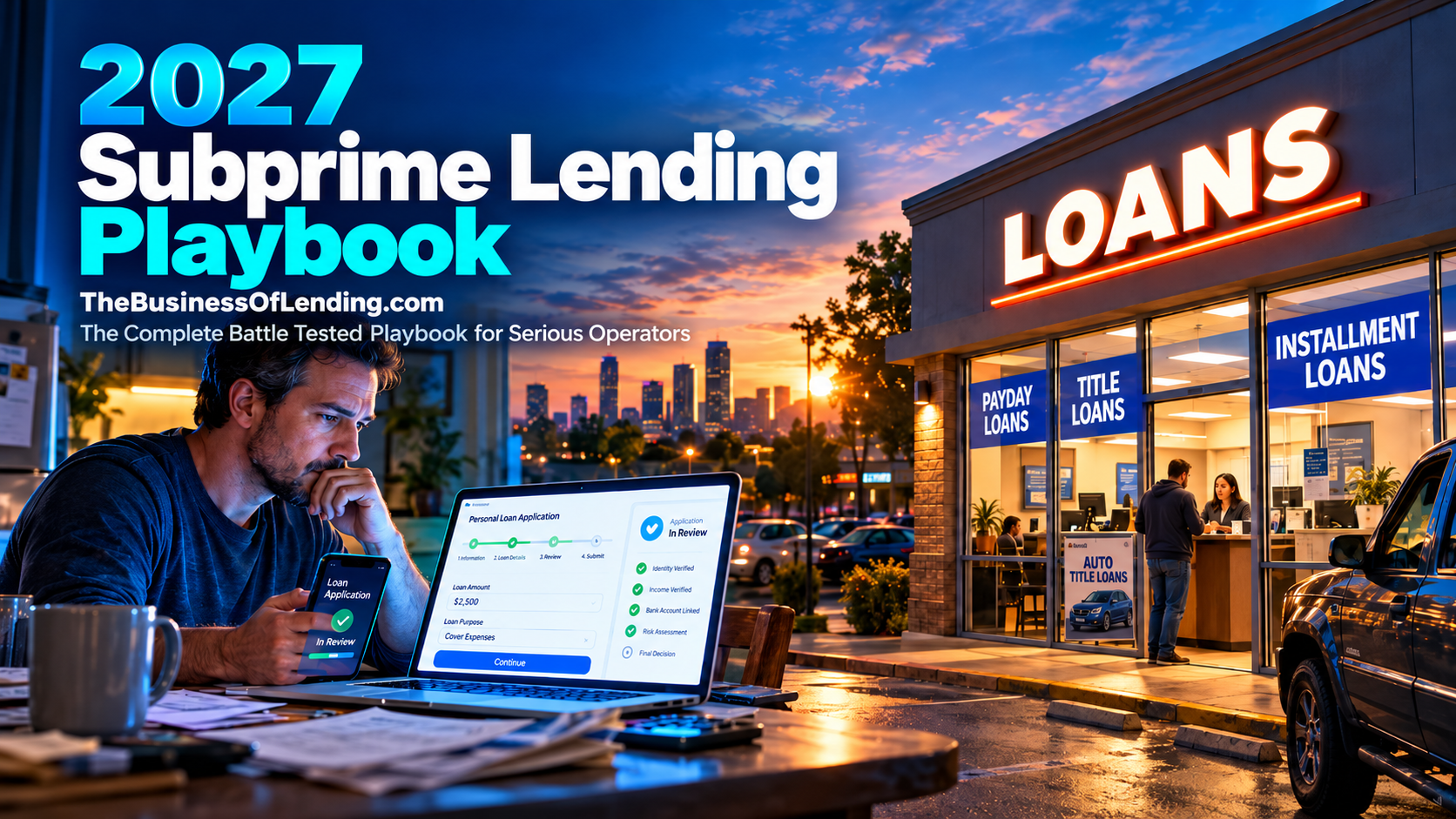
Your old lending business plan is getting expensive.
The borrowers changed. The competition changed. The regulators changed. The distribution channels changed.
The question isn't whether Americans still need to borrow money. It's whether your lending model can acquire them, underwrite them, collect from them, and produce a profit in the market that exists now.
The biggest threat to your lending business may not be another lender across the street.
It may be a cash-advance app on your customer's phone, a platform policy that kills your acquisition channel, or a regulatory development you didn't see coming.
What This Report Is
The 2027 Subprime Lending Playbook is an operator-focused report on launching, improving, and scaling payday, installment, car title, line-of-credit, Texas CAB, online, and tribal lending operations.
It examines the economics, competitors, technologies, underwriting decisions, marketing restrictions, compliance exposures, and capital requirements shaping the industry going into 2027.
Pages
A substantial report built for business decisions, not motivational reading.
Chapters
Organized around markets, products, competitors, compliance, and operations.
Referenced Sources
Source references and supporting material for further verification and due diligence.
Who Should Read It?
1. The First-Time Lender
You have capital and ambition. You need to understand products, licensing, vendors, underwriting, startup economics, and the decisions that can destroy a new lending business.
2. The Existing Operator
You own a check-cashing, pawn, payday, or title operation and want to add lending products or expand online without jeopardizing the business you already built.
3. The Multi-State Team
You understand lending but need a sharper picture of the 2027 competitive landscape, state considerations, technology, acquisition channels, and emerging compliance risks.
The Lending Market Didn't Stand Still
The previous edition reflected an earlier market. This edition examines the developments that changed the operating assumptions.
| Earlier Assumption | 2027 Operating Question |
|---|---|
| Storefront distribution drives the business. | How much demand has shifted to digital channels? |
| Traditional payday lenders are the principal competitors. | How are EWA, cash-advance apps, banks, and fintechs competing for borrowers? |
| More applications mean more growth. | What happens to funded loans, defaults, acquisition costs, and contribution profit? |
| Federal enforcement is the primary concern. | Which federal and state authorities, private actions, and banking partners create the most material risk? |
| Online advertising can scale customer acquisition. | Which platform restrictions affect high-APR products, and what alternative channels remain viable? |
| AI is a future opportunity. | Where can AI improve underwriting, collections, training, and operating efficiency today? |
The report includes dated statistics, source references, and specific developments current to its publication. Verify subsequent changes before making legal or investment decisions.
What's Inside the Playbook?
Twenty-one chapters organized around the questions serious lending operators need answered.
The 2027 Lending Scoreboard
The key industry numbers and operating assumptions that changed since the previous edition.
Your New Competitors
EWA, cash-advance apps, banks, BNPL, digital lenders, and the emerging influence of AI search.
Products and Profitability
Payday, installment, title, lines of credit, Texas CAB, bank partnerships, and tribal lending structures.
The State-by-State Landscape
Market selection, restrictions, licensing considerations, and the need for current state-level legal review.
Regulatory Enforcement
Federal and state regulators, litigation exposure, payments compliance, and emerging enforcement priorities.
Underwriting for 2027
Cash-flow data, bank verification, AI-assisted decisions, fraud, identity verification, and credit-risk controls.
Customer Acquisition
Search, local marketing, advertising restrictions, AI discovery, messaging, and customer acquisition costs.
Collections and AI Agents
Automation opportunities, communication rules, customer consent, payment arrangements, and collections risk.
Capital and Cash Requirements
Startup capital, funding costs, servicing expenses, liquidity, and realistic operating economics.
The First 90 Days
A sequenced launch framework covering decisions, vendors, compliance preparation, and operational readiness.
The 2027 Watch List
Pending regulatory, legal, technology, and market events that deserve operator attention.
Sources and Appendices
Supporting references, industry data, and additional material for due diligence.
Get the 2027 Subprime Lending Playbook
98 pages. 21 chapters. A serious examination of the American subprime lending business going into 2027.
One-time purchase • Digital PDF
Get Instant Access — $147 →Secure checkout through PayPal. Digital delivery is handled by the seller's purchase process.
Why $147?
A bad state-selection decision can cost you licensing fees, legal bills, and months of work. A poor lead source can burn thousands before your first-payment defaults expose the problem. A weak underwriting model can make a profitable-looking loan portfolio worthless.
The expensive part of lending isn't buying information. It's operating without it.
The Playbook is designed to help you ask better questions, challenge outdated assumptions, and identify risks before committing serious money.
One question worth asking before you fund your next million dollars:
Are you building a lending business that can generate sustainable net operating income, or simply a business that originates more loans?
Who Wrote It?
Frequently Asked Questions
What format is the report?
A 98-page digital PDF, suitable for reading on a computer or tablet and printing for reference.
Is this the same as The Bible?
No. The Bible is the operating manual: how to build and run a consumer lending business. The 2027 Playbook focuses on the current market, competitive developments, strategic decisions, and changing regulatory landscape.
I bought the 2025 edition. Is this different?
Yes. This second edition updates the market analysis, key figures, competitors, regulatory developments, and strategic considerations for the 2027 environment.
How current is the information?
The second edition was updated October 24, 2026. Source references are included, but market data, laws, court decisions, and platform policies can change after publication.
Is this legal advice?
No. It is an educational and business strategy report. Consult qualified counsel regarding licensing, compliance, and legal requirements in each jurisdiction.
Who should not buy this report?
Anyone expecting a guaranteed path to profits, a shortcut around lending laws, or a substitute for professional due diligence.
Know the Market Before You Risk the Money.
The 2027 Subprime Lending Playbook is built for people who want to understand how lending businesses compete, operate, and make money.
98-Page Digital Report
Get the 2027 Playbook — $147 →Secure PayPal checkout
Go Deeper
The Bible
The operating manual for building and improving a subprime lending business.
Explore The Bible →14-Day Lending Pro
Frontline training for payday, title, and installment lending employees.
Explore the Training →Free Industry Newsletter
Practical lending intelligence, regulatory developments, and operator-focused analysis.
Signup →